Pigeon droppings cleaning in Blackpool for balconies, roofs and commercial buildings
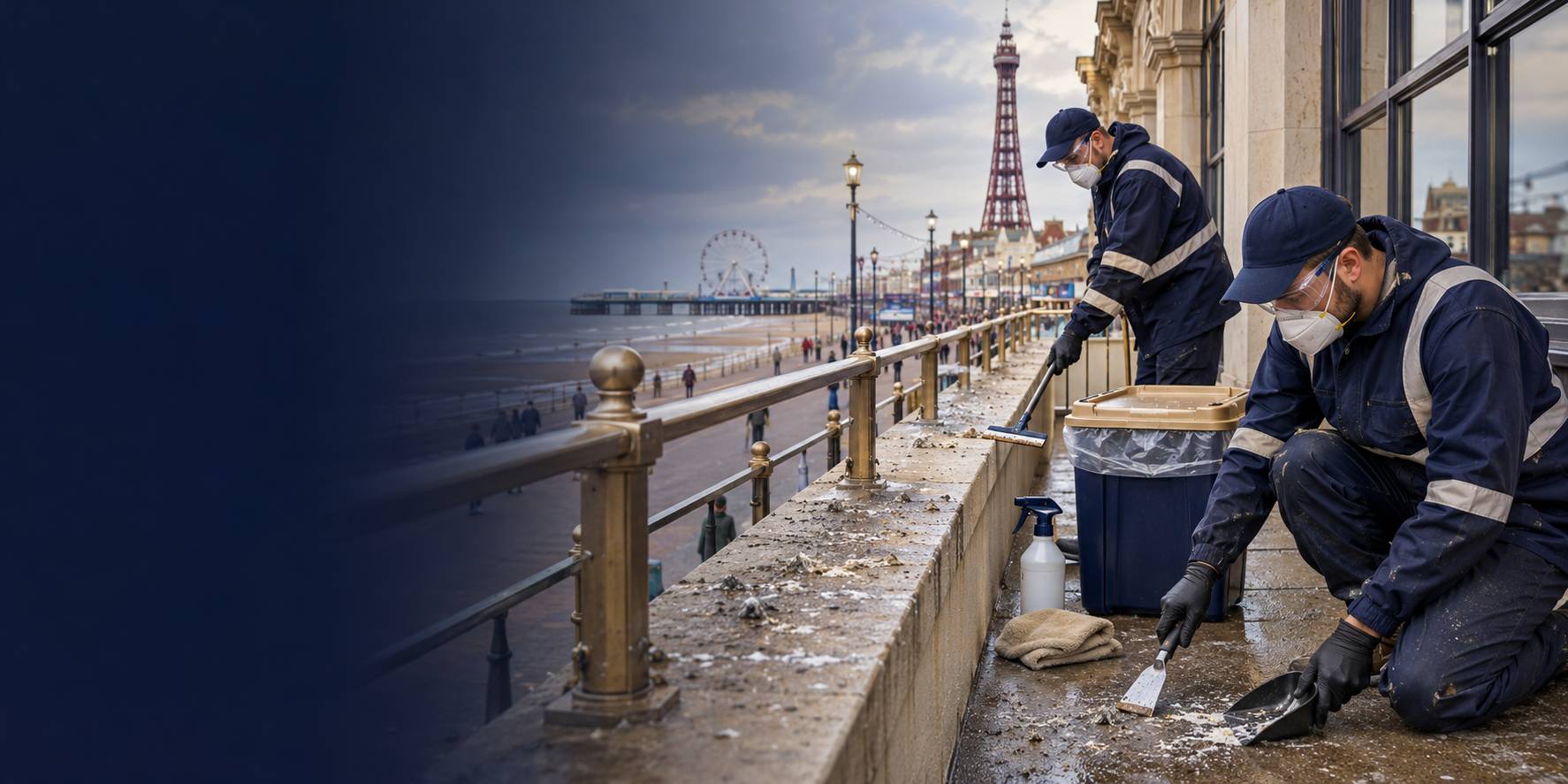
Pigeon droppings cleaning in Blackpool requires more than a quick sweep from a ledge or balcony. Accumulated deposits can become airborne when disturbed, while nests, feathers, damaged surfaces and difficult access complicate the work. Nova Clean discusses controlled cleaning for homes, hotels, shops, offices and managed buildings across the Fylde. We begin with photographs taken from a safe position, the approximate area affected, access information and whether birds are still present. The plan separates removal of deposits, cleaning and any appropriate disinfection from building repairs or bird control measures. This is especially important on the seafront, where wind, public footfall and neighbouring premises can influence how the work is carried out.
Assess the deposit and the setting before disturbing it
A few recent marks on an accessible window sill are not the same as months of build-up beneath a roosting point. We consider depth, dryness, the surface below, nearby ventilation openings and the route for waste removal. Photographs can reveal whether the area is above a pavement, inside a plant space or beside an entrance used by staff and visitors. The survey should identify fragile materials, standing water, loose fixtures and any signs of continued bird activity. The scope may need to include protective measures for adjacent surfaces and a temporary exclusion zone. We do not assume that a single cleaning method is suitable for every location.
Control dust and protect people nearby
Dry sweeping or high-pressure blasting can spread fine material beyond the intended area. The method should minimise disturbance and contain removed deposits, with equipment and personal protection chosen for the assessed conditions. Occupants, passers-by and neighbouring businesses may need to be kept clear while work is underway. A balcony serving an occupied flat needs different arrangements from a roof plant area that can be closed to access. We agree when windows and air intakes should remain shut and how waste will leave the building. The aim is to clean the affected surface without creating a second contamination problem elsewhere.
Plan safe access to ledges, roofs and canopies
Blackpool buildings include narrow rear yards, pitched roofs, flat roofs, awnings, signs and upper-floor balconies. Work at height requires a suitable access method and an assessment of the surface that equipment will stand on. A photograph from the street does not confirm that a ladder is safe or that the roof can be walked on. We ask about gates, parking, neighbouring property and overhead hazards before proposing an appointment. Some areas may require a specialist access contractor or a different sequence of work. Cleaning should not begin by stepping onto an unverified roof or reaching across a fragile canopy.
Choose a method suited to the substrate
Droppings can affect painted metal, stone, brick, glass, timber and coated panels differently. An aggressive product or pressure level may remove a finish along with the deposit. We inspect the condition of the substrate and consider a small test when staining or prior damage is visible. Moisture needs to be controlled around joints, electrical fittings and occupied rooms. Some staining can remain after deposits are removed because the surface has been altered over time. The quotation should distinguish a cleanable residue from permanent etching, corrosion or paint failure, so the owner knows when a repair or replacement is a separate decision.
Deal with nests and active birds responsibly
We ask whether birds are currently nesting or returning to the site. Active nests and eggs may require legal and specialist consideration before any removal or exclusion work is planned. Cleaning a ledge while the access or nesting issue remains unresolved can lead to rapid reaccumulation. The building owner or manager should arrange appropriate advice for bird management and confirm what work is permitted at the time. We do not promise to remove active nests as a routine part of surface cleaning. Coordinating the cleaning with lawful exclusion or building maintenance gives the client a more durable plan.
Remove waste and keep drainage clear
Deposits, feathers and nesting material should be collected and contained, not washed into a public footway or a roof drain. We establish the volume, route through the building and appropriate waste arrangements before work. A blocked drain may already be contributing to standing water and surface deterioration; that requires separate assessment. On a commercial site, the manager may have procedures for access, waste storage and collection that the cleaning team must follow. A clear waste route protects residents and staff while avoiding contamination of clean areas. We record significant restrictions in the quotation and handover.
Clean balconies and terraces with neighbouring homes in mind
Balcony cleaning can affect the flat below if water or loosened material passes through gaps or over an edge. We discuss drainage, waterproofing, furniture, planters and the condition of the balustrade. The occupant should remove personal items that can be safely moved and identify any fragile fixtures. Where deposits are heavy, collection and controlled surface cleaning are preferable to simply rinsing everything outward. The plan may need agreement from a managing agent or freeholder for a shared façade. A sound result depends on access and containment as well as the visible floor and railings.
Protect plant, equipment and air-handling areas
Bird activity around external air units, solar arrays and roof plant can bring deposits close to electrical and mechanical equipment. We ask who maintains the equipment and whether it can be isolated or protected by a competent person. Cleaning should not involve dismantling a unit or touching electrical components without an agreed specialist scope. The surrounding surface may be cleanable while the equipment itself needs a separate service. Photographs and a site contact help define that boundary. The same approach applies to signage and lighting on commercial façades, where cables and fixings must be considered before water or tools are used.
Discuss disinfection in terms of the assessed need
Removing soil is a prerequisite for any subsequent surface disinfection. Products must be appropriate to the substrate and used according to their instructions, including dilution, contact time and rinsing where required. We do not claim that a quick spray makes every porous or damaged surface safe. The risk assessment may identify material that cannot be cleaned adequately in place or an area that should remain closed until repair. Documentation should state the actual product and process used where that is part of the agreed service. Clear language helps the client distinguish physical removal, cleaning and disinfection.
Prevent rapid recurrence with a coordinated plan
Cleaning alone does not stop birds returning to a favoured ledge. After the surface has been assessed, the building manager can consider lawful and suitable measures such as repairing openings, changing access to sheltered spaces or arranging specialist bird deterrents. These measures should be designed so they do not trap birds or create new hazards for people and wildlife. We can note likely roosting points observed during the cleaning survey but do not present a generic installation as a guaranteed solution. Maintenance and inspection of the chosen measures remain important, particularly on exposed coastal buildings.
Examples of practical scopes in the Fylde
A shop canopy in central Blackpool may require work outside opening hours with the pavement below managed; a hotel roof may need separate access planning and coordination with maintenance staff. A residential balcony in Bispham might be reached from the flat, but neighbouring windows and furniture still need protection. A plant area in Poulton-le-Fylde can present cable and drainage issues that change the method. Each example illustrates why location, surface and use matter. We quote for the actual premises after discussing the condition rather than offer one fixed price for all droppings cleaning.
Document the result and any remaining defects
Before-and-after photographs can help a remote property manager understand what was removed, provided privacy and access rules allow them. A handover can record the surfaces cleaned, any area left inaccessible and defects such as corrosion, cracked paint or failed seals. It should also identify any ongoing bird activity noted during the visit. The record is useful for planning a separate repair or deterrent installation. We avoid claiming that a surface is restored to new condition when staining or material loss remains. The client receives a practical account of completed work and the next decision needed.
Know when a building survey must come first
Heavy accumulation can conceal damaged pointing, loose flashing, rotten timber or a corroded fixing. Cleaning may reveal the defect, but the cleaning team should not be expected to diagnose structural safety from a photograph alone. We ask whether the owner has had the area inspected and whether there are reports of leaks or movement. If a balcony, canopy or roof appears unstable, access should be reviewed by the appropriate specialist before cleaning is booked. The plan can then be sequenced around repairs, with deposits removed when it is safe to do so. This avoids spending money on cleaning a surface that immediately needs to be opened or replaced.
Choose timing around weather and public access
Strong wind can make containment difficult, particularly on a high seafront façade. Rain may change the condition of deposits and the safety of an access platform, while freezing conditions can create slippery surfaces. We discuss a suitable weather window and any restrictions imposed by the building manager. If work is above a public entrance, a temporary closure or alternative route may be needed. Hospitality premises may prefer a quieter period to protect guests, but the access method and time for safe disposal must remain realistic. A postponed visit can be the responsible choice when conditions would spread debris or make work at height unsafe.
Distinguish cleaning from façade restoration
Once droppings are removed, a wall may still show bleaching, etched stone, failed paint or staining in porous mortar. A controlled wash can improve its appearance without restoring the original colour or texture. We explain the likely limit after inspection and, where useful, try a small area. Repainting, repointing, stone repair and replacement of corroded metal are separate works that may require a contractor with the relevant trade skills. The distinction matters in a visible location such as a hotel frontage: the owner can plan a complete project rather than assume that a cleaning visit includes every repair.
Coordinate with property managers and neighbours
A block of flats may require permission to access a shared roof or façade, notice to residents and agreement about where equipment can be placed. We ask who can authorise the work and whether another contractor is already responsible for bird control. Clear communication helps avoid opening windows into the work zone or parking beneath an exclusion area. The plan can set a contact for decisions if hidden material is found. In a small commercial terrace, neighbours may share access or drainage, so their operations should be considered. These arrangements are part of an effective clean, not merely administrative detail.
Review maintenance after the first clean
Once the surface is visible, the manager can record the rate of new deposition and check whether any deterrent or repair is working. An inspection schedule may be more economical than waiting until a heavy build-up has formed again. Photographs from a fixed safe viewpoint can show changes without repeated risky access. If birds move to another ledge, the maintenance plan may need adjusting rather than simply repeating the same cleaning. We encourage the client to keep records of cleaning, repairs and exclusion measures together so the next contractor understands the history of the building.
Arrange pigeon droppings cleaning in Blackpool
We discuss enquiries from Blackpool, Bispham, Anchorsholme, Fleetwood, Thornton-Cleveleys, Poulton-le-Fylde and Lytham St Annes. Send the postcode, approximate height, photographs from a safe position, size of the affected area and whether the premises are occupied or open to the public. Tell us if birds are still present and whether a managing agent or contractor must approve access. Nova Clean can then discuss the cleaning scope, any specialist access needed and the information required for a quotation. Call 0845 52 805 20 or use the cleaning quote form.