Façade cleaning in Blackpool with careful methods for render, brick and cladding
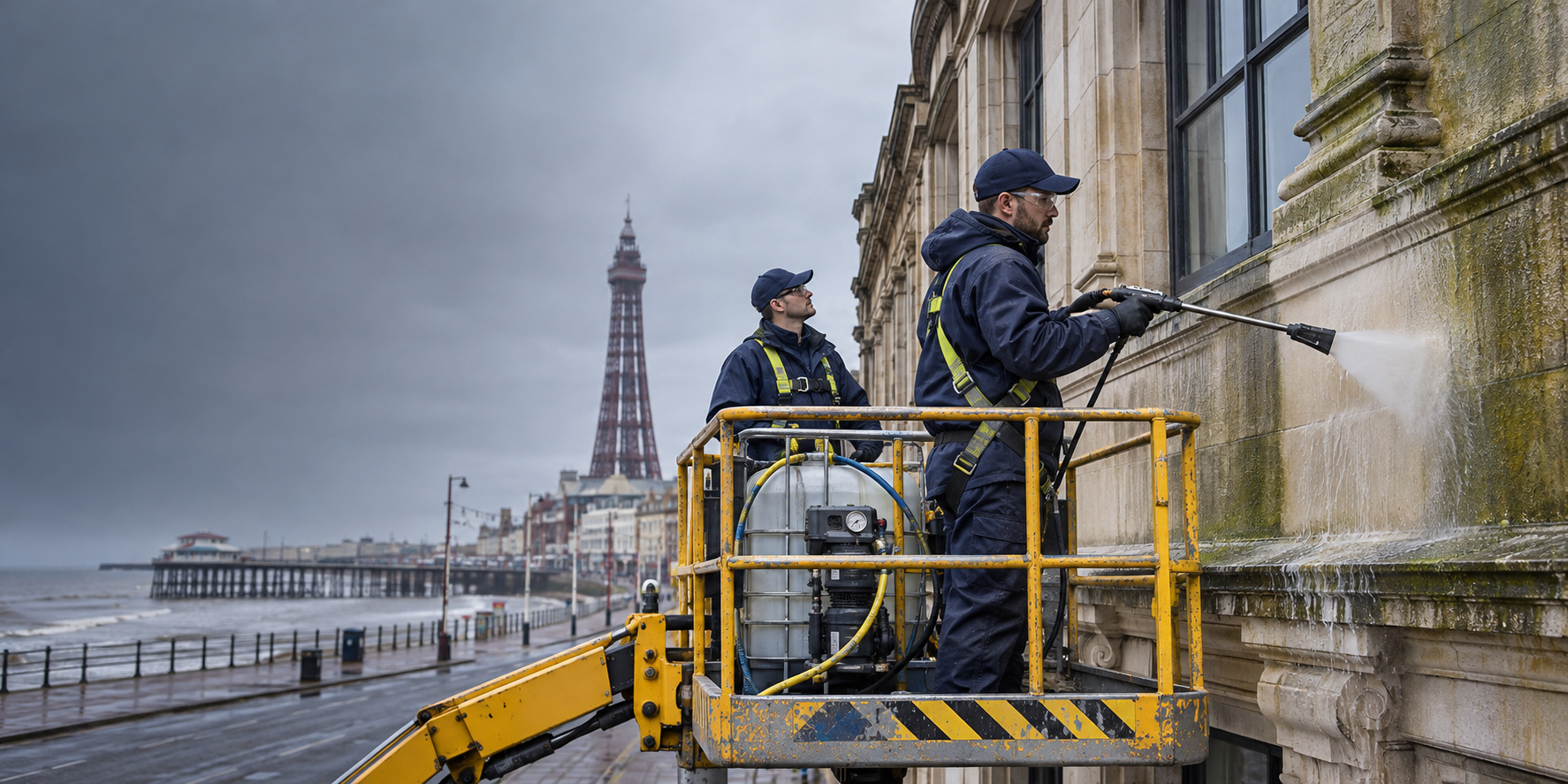
Façade cleaning in Blackpool begins by understanding the building material, the deposits and the exposure of the site. Salt-laden air, traffic film, biological growth and bird activity can change the appearance of walls, but a single pressure setting cannot be used safely on every render, brick, stone or cladding system. Nova Clean discusses cleaning for houses, hotels, shops and managed buildings across the Fylde. We ask for photographs, an approximate height, details of the façade finish and any known repairs or water ingress. The goal is a method and scope that improve suitable surfaces while protecting joints, coatings, windows and people nearby. Repairs and repainting remain separate decisions when the material itself is damaged.
Identify render, masonry and cladding before choosing a method
Painted render, traditional brick, natural stone, metal panels and composite cladding have different tolerances for water, chemicals and abrasion. We inspect visible condition and ask for manufacturer guidance where a proprietary system is fitted. A façade may contain several materials within one elevation, including timber, glazing, seals and decorative details. The cleaning plan should identify each area rather than describe the entire wall as one surface. An older brick face with soft mortar may require a gentler approach than a sound modern panel. A small test area can reveal whether soil is removable and whether the surface changes colour or texture under treatment.
Separate surface soil from failure of the finish
Dark streaks below a window may be atmospheric deposits, runoff from metal fittings or a sign of a leak. Green growth may reflect shade and persistent moisture, while blistered paint or crumbling render points to a repair issue. We ask about the history of the mark and whether it returns after rain. Cleaning can remove suitable soil but cannot make a failed coating sound or fix a drainage defect. A survey can note these distinctions so the owner knows whether to commission cleaning, building repair or both. Promising a uniform colour without examining the finish risks damaging the wall and disappointing the client.
Plan access for a working building
Height, pavement width, parking, overhead cables and neighbouring property determine the access method. A seafront hotel may need a carefully scheduled work zone around guests and deliveries; a terraced house may have limited rear access. Ladders, towers or powered platforms require different space and ground conditions. We discuss whether permission is needed for equipment on a public footway and who will organise it. Windows and ventilation openings may need to be closed during the work. The plan should keep people clear of falling debris, overspray and hoses while preserving an agreed entrance route where the building remains occupied.
Control water and cleaning products
Water can enter behind damaged render, failed joints and poorly sealed openings. A method that uses less water may be appropriate for a vulnerable elevation, while another material may tolerate a controlled wash. We consider the direction of application, pressure, product concentration and recovery where needed. Nearby planting, vehicles, outdoor furniture and drainage should be protected. Products must be suited to the substrate and used according to their instructions, with attention to dwell time and rinsing. We do not assume that a powerful chemical is the quickest or safest answer. A tested, proportionate process is usually more useful than an aggressive one.
Clean brick without eroding mortar
Brick façades vary in hardness and age, and mortar can be weaker than the brick itself. Abrasive blasting or high pressure may remove the surface or open joints, especially on older buildings. We inspect the wall and consider a small trial where deposits are heavy. Efflorescence, paint, soot and biological growth need different assessment, and some staining may reflect moisture moving through the wall. If pointing is loose, a mason should address it before the area is exposed to intensive cleaning. The quotation should say whether the objective is general soil reduction, local stain treatment or preparation for a separate repair.
Take care with natural stone and decorative features
Stone sills, cornices and carved details can be more fragile than a flat wall panel. Their appearance may include natural weathering that should not be stripped away indiscriminately. We ask about the building's age and whether heritage or management restrictions apply. A conservator or stone specialist may be needed for significant historic features. Ordinary façade cleaning should not be presented as restoration of damaged masonry. We identify areas that can be treated safely and record those excluded pending specialist advice. The client can then plan a proportionate project that respects the character and condition of the building.
Consider render, paint and external insulation systems
Rendered and insulated façades can have manufacturer's maintenance instructions and limited tolerance for impact or pressure. We seek those details when available and inspect for cracks, hollow areas, failed sealant and algae. Cleaning an already damaged surface can expose defects or allow water entry, so repair may need to come first. Painted render may retain discoloration where the coating has aged, even after surface soil is removed. A test helps distinguish cleanable film from faded or failed paint. We do not promise to restore a uniform freshly painted appearance through washing alone.
Protect windows, signs and electrical fittings
Façades contain glazing, frames, lights, signs, cameras, vents and cables. We agree which fittings can be covered and whether a competent person must isolate equipment. Cleaning the wall does not include dismantling a sign or opening an electrical fitting. Overspray on glass can leave residue, so the plan should include appropriate protection and a final check of adjoining surfaces within the agreed scope. A shopfront in central Blackpool may require work outside trading hours, while a hotel façade may need guest rooms near the work zone to remain closed. These operational details affect the method and cost.
Deal with algae and recurring damp patches
Shade and water runoff can encourage growth on a north-facing elevation. Removing visible algae may improve the wall, but it will return if a leaking gutter or persistent damp source is ignored. We ask whether the building has had drainage or façade repairs and note any obvious defect for the owner to investigate. A suitable treatment, where appropriate, must be compatible with the surface and nearby planting. We do not promise permanent prevention. A maintenance plan that combines cleaning, gutter care and repair of water entry points is more credible than repeated washing of the same patch without finding the cause.
Schedule work around Blackpool's coastal conditions
Wind can carry spray beyond the intended elevation, and heavy rain may affect access or product dwell time. We choose a suitable weather window and discuss how the building can be protected if conditions change. Seafront properties may collect salt and airborne grime more quickly than sheltered inland buildings, but exposure also varies by height and orientation. A realistic programme includes setup, testing, cleaning, runoff control and a handover inspection. Hurrying a multi-storey façade into a narrow time slot can increase risk and leave uneven results. The owner should know which elevations are included and how weather may affect scheduling.
Use a sample to agree the expected appearance
Cleaning may reveal previous repairs, patchy paint or natural colour variation. A trial area allows the client to judge the likely improvement before the full elevation is treated. It should be chosen to represent the condition rather than only the easiest clean section. We compare it in consistent light and discuss whether the result meets the owner's objective. A test cannot guarantee every stone or panel will respond identically, but it gives a useful basis for the scope. The record can also show where more intensive stain treatment would create an uneven appearance and may not be worthwhile.
Coordinate cleaning with repainting and repairs
If a façade is due for repainting, cleaning may serve as preparation, but the painter should confirm the required surface condition and drying time. Loose paint, failing render, damaged joints and corroded fixings need repair by suitable trades. Cleaning after those repairs may be preferable in some zones, while cleaning first can reveal hidden defects in others. We discuss the sequence with the property manager and contractor rather than repeat work unnecessarily. A clear written division of responsibilities prevents a cleaning handover being mistaken for a warranty on the wall's structural or weatherproof condition.
Document the treated elevations
A building can have front, rear, gable and courtyard elevations with different materials and access. The quotation should identify each face and any exclusions, such as inaccessible upper details or unstable areas. Before-and-after photographs can record the treatment and visible defects where permissions allow. At handover, we review the result against the agreed test and note remaining staining or repair needs. This helps managing agents and owners compare future maintenance visits. A concise record is more useful than a broad claim that the entire building has been restored when only selected surfaces were cleaned.
Understand graffiti and localised staining
Graffiti removal is a separate problem from general façade washing. Paint, marker and adhesive react differently on porous brick, coated metal and render. A product that lifts a mark may also alter the wall finish or leave a clean halo. We ask for close and wider photographs, the date of the incident and any previous treatment. A small test can show the likely result and whether a specialist sacrificial coating is present. On a prominent shopfront, the owner may prefer a carefully limited improvement to an aggressive process that damages the substrate. The quotation should make that choice explicit.
Assess salt deposits and metal staining
Coastal exposure can leave salt residues, while corrosion from fixings or railings may create streaks down a wall. The deposit may be removable, but the source can continue to stain the façade. We identify the affected material and consider whether a metal repair or replacement is needed before cleaning is repeated. Some porous stone can absorb discolouration that does not respond to a simple wash. A test and a realistic discussion of the finish help the owner decide whether cleaning, repair or repainting offers the best value. The cause should be addressed where possible to reduce recurrence.
Protect the public realm and neighbouring property
A multi-storey façade may stand over a busy pavement, a café terrace or parked vehicles. The work zone must be planned with the property owner and any relevant authority, with barriers, timing and access arrangements suitable for the location. We consider where debris and runoff can travel, particularly in wind. Nearby shopfronts, signage and planted areas may need protection. The client should not assume that a cleaning team can close a public route without the necessary arrangements. Practical coordination can determine whether a job is feasible on the proposed date.
Maintain a cleaned façade sensibly
After the work, the owner can keep gutters clear, repair leaks and check sealant around windows to reduce staining. A periodic visual inspection can identify new growth or runoff marks while they are still localised. The interval for another clean depends on exposure, substrate and building use, not a universal schedule. A seafront elevation may need attention sooner than a sheltered rear wall. We can note areas that collected soil rapidly or remained stained, allowing the manager to plan targeted maintenance. Routine care is most effective when the source of deposits is understood.
Request a façade cleaning assessment in Blackpool
We discuss façades in central Blackpool, North Shore, South Shore, Bispham, Marton, Fleetwood, Thornton-Cleveleys, Poulton-le-Fylde and Lytham St Annes. Send the postcode, building type, number of storeys, material if known and photographs from safe positions. Tell us about cracks, leaks, recent painting or any access restrictions. Nova Clean can then discuss a survey, a test area and a suitable scope. Call 0845 52 805 20, email